Upon arrival meet and greet at the airport and transfer to hotel.
Check-in time is 14.00 hrs.
Overnight at hotel.
Breakfast at hotel and later proceed the sightseeing tour of Kathmandu Durbar Square, Swayambhunath Stupa and Patan.
AM: Visit Kathmandu Durbar Square and Swayambhunath.
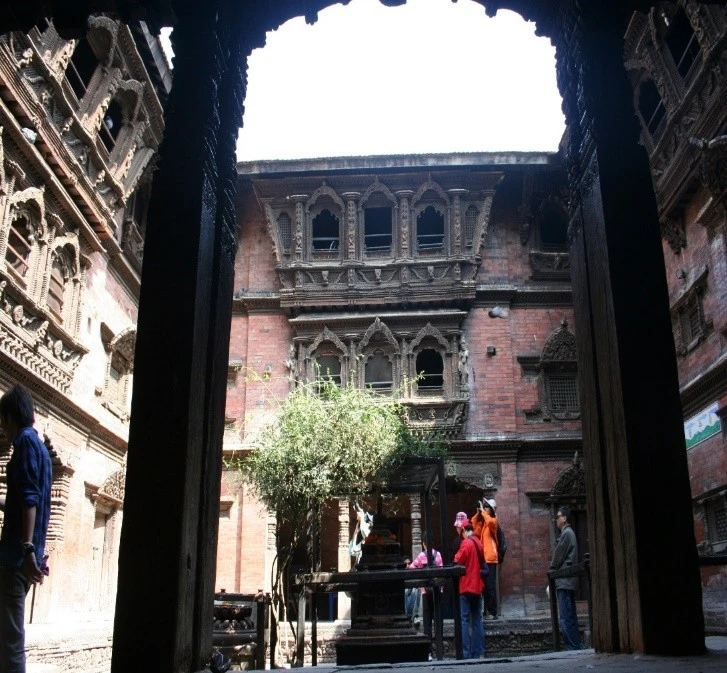
Kathmandu Durbar Square: Listed as one of the eight Cultural World Heritage Site by UNESCO,
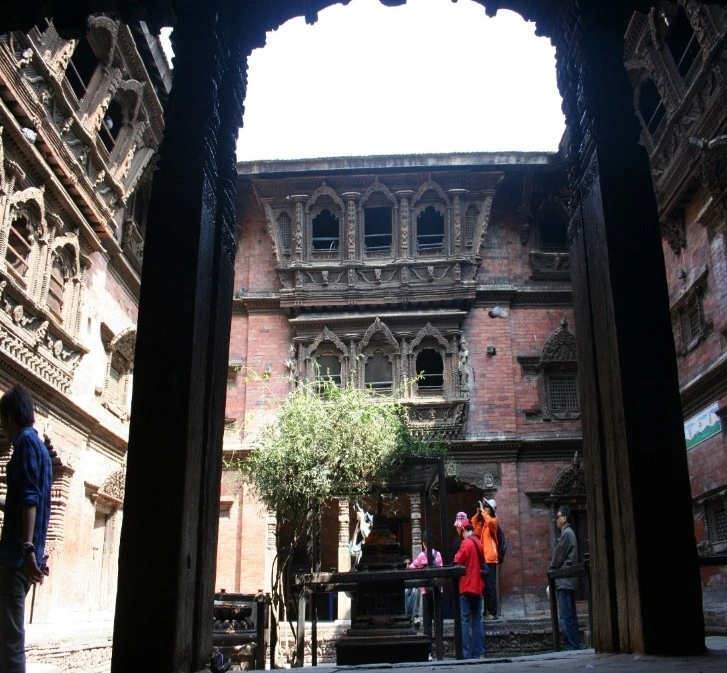
Kathmandu Durbar Square is cluster of ancient temples, palaces, courtyards and streets that date back to the 12th and 18th centuries. The visit of Durbar Square includes the emple of Living Goddesses, who acknowledges the greetings of the devotees from the balcony of her temple residence, the Hanuman Dhoka Royal Palace, the historic seat of the Royalty; the magnificent Taleju Temple towering 40 meters. The capital takes its name from the giant pagoda of Kasthamandap, which is said to have been built of a single tree. The Kasthamandap has been destroyed in recent massive earthquake and now almost completed renovation work. It has been the main focal point of the city’s social, religious and political from the Malla kings.
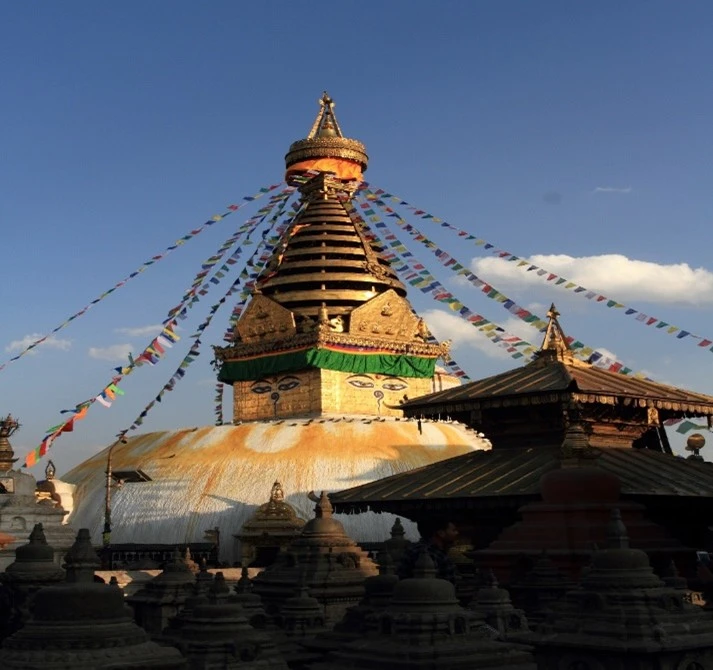
Swayambhunath: Located approximately 4 km west of Kathmandu, Buddhist stupa this is said to be 2500 years old, The stupa which forms the main structure is composed of a solid hemisphere of brick and earth supporting a lofty conical spire capped by a pinnacle of copper gilt. Painted on the four sided base of the spire are the all seeing eyes of Lord Buddha. This hill is a mosaic of small Chaityas and Pagodas temples. It is one of the holiest Buddhist Chaityas in Nepal and oldest of its kind.
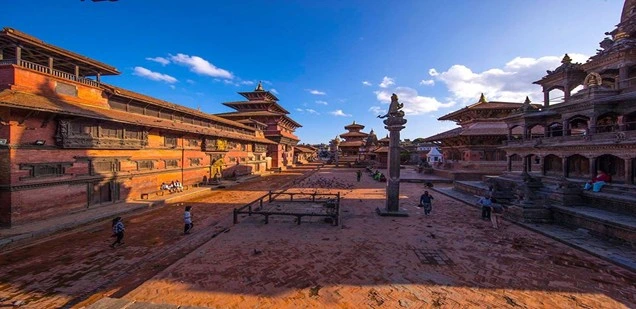
Patan: 5 km from Kathmandu Patan also known as Lalitpur is the city of fine arts, enclosed withing 4 stupas said to be built in 3rd century AD, by Emperoro Ashoka. The city retains much of the old charm with its narrow streets, brick houses and multitude of well-preserved Hindu temples, Buddhist monasteries (vihars) and monuments. Here you will visit the Shikahara style Krishna Temple built by King Siddhi Narshing Malla, Hiranya Varna Mahavihar - dating from the 12th century, the three-storied shrine, also known as the Golden Temple.
Overnight at hotel.
Breakfast at hotel and drive to Nagarkot enroute visit Bhaktapur and Changunarayan temple.
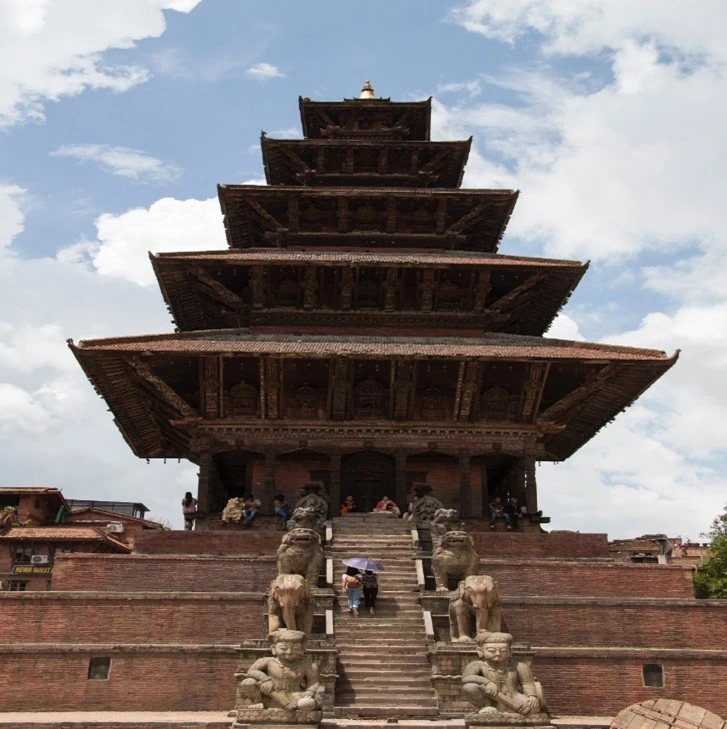
Bhaktapur: Perched on a hill at an altitude of 1,401 m, Bhaktapur or Bhadgaon literally city of Devotees, is a major tourist destination. It is 14 km east of Kathmandu on the Arniko Highway that leads to the Chinese border still untouched by rapid urbanization and has managed to retain its brick paved roads, charming red brick houses and way of life that goes back to medieval times. Here you will visit Nyatapola dedicated to tantric goddess, Bhairabh Temple dedicated to Bhariav-the god of terror, Pottery square, The 15th Century Palace of 55 carved windows, Golden Gate etc.
Continue visiting Changunarayan.
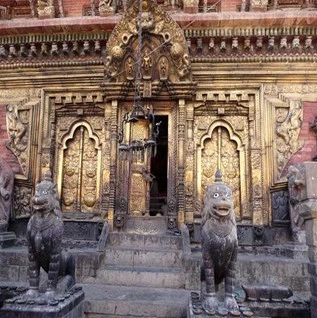
Changunarayan: The Temple of Changunarayan is situated on the ridge overlooking Bhaktapur at a distance of 15 m east of Kathmandu, is universally acknowledged as the most stately example of the oldest specimens of Pagoda architecture in Nepal from early 3rd century. The temple dating from the Lichhavi period is embellished with exquisite wood and stone carvings. Changu is one of the ancient historical places situated on a hillock with conical shape.
Continue drive to Nagarkot.
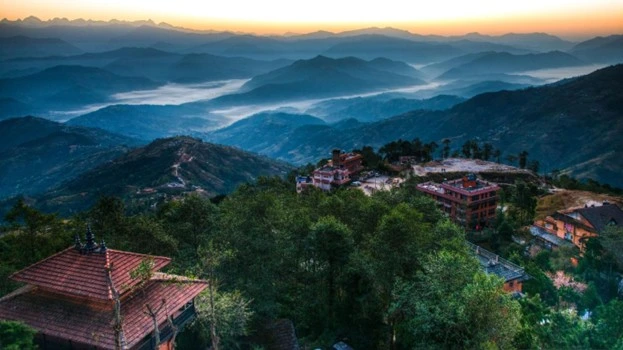
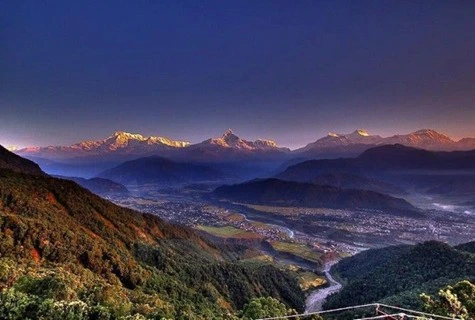
Nagarkot: is situated about 32 km east of Kathmandu, popular hill station for sunrise and sunset. Nagarkot commands one of the broadest views of Himalayas (subject to weather permit) in the Kathmandu valley (8 out of 13 in Nepal) such as Annapurna Range, Manaslu Range, Ganesh Himal Range, Langtang Range, Jugal Himal Range, Rolwaling Range, Mahalangur Range (Everest Range) and Numbur Range with views of Kathmandu Valley and Shivapuri National Park. It is located between Indrawati river in the east and Kathmandu in the west. The top of Nagarkot commands accelerating views in all directions. The altitude of Nagarkot is 2229 m above sea level. From here different hikes (short hikes/day hikes)/trek can be done.
Overnight at hotel.
Early morning sunrise view from the hotel (subject to weather permits)
Breakfast at hotel.
Later drive back to Kathmandu.
Visit Boudhanath Stupa and Pashupatinath Temple.
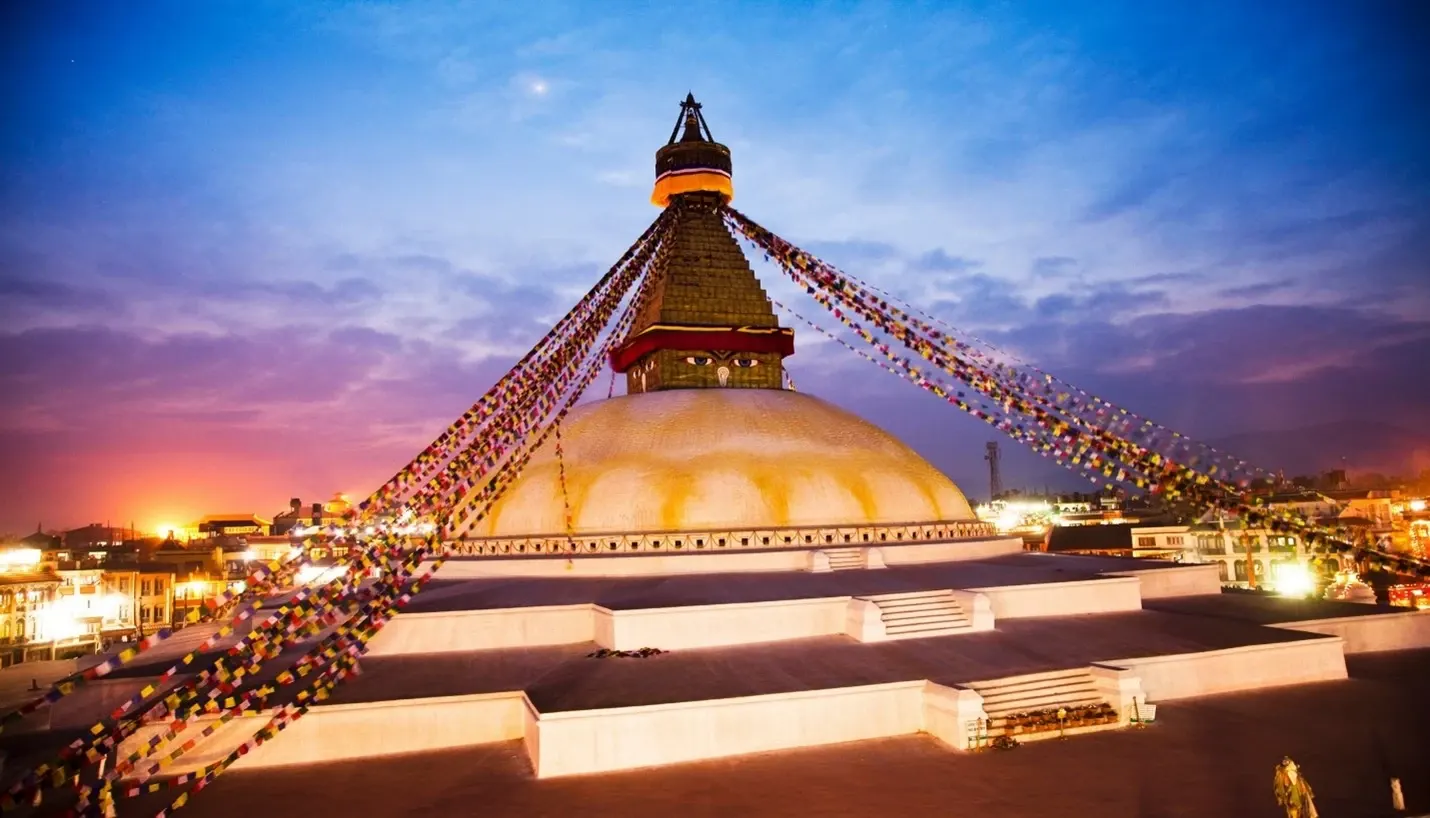
Boudhanath: This stupa, eight kilometers east of Kathmandu City is one of the biggest in the world of its kind and one of the most imposing landmarks in Kathmandu. It stands with four pairs of eyes in the four cardinal direction keeping watch for righteous behavior and human prosperity. This Buddhist stupa was built by King Man Dev at the advice of Goddess Mani Jjogini. It is built on an octagonal base inset with prayer wheels. The shrine is ringed by houses of Lamas or Buddhist priests. This is also the center of Tibetan Buddhism.
Pashupatinath: Situated 5 Kilometers east of Kathmandu city, Pashupatinath temple is one of the holiest/sacred Hindu temple dedicated to Lord Shiva. Situated amidst a lush green natural setting on the bank of the sacred Bagmati river, the temple built in pagoda style has gilded roof and richly carved silver doors. Visitors will be permitted to view the temple from the east bank of Rivers Bagmati, entrance in the temple being strickly forbidden to all non-Hindus. Pashupatinath is the center of annual pilgrimage on the day of Shivaratri which falls in the month of February / March. Behind the temples are the cremation grounds. Chronicles indicate the temple existed before 400 A.D.
Overnight at hotel.
After breakfast drive to Bandipur.
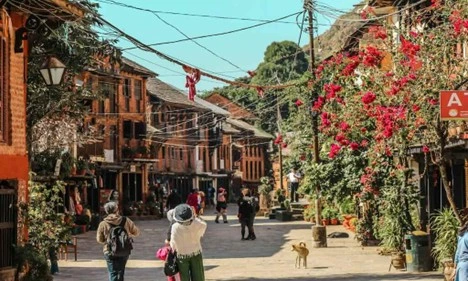
Bandipur is a picturesque town nestled in the Himalayan foothills of Nepal, a land as famous for its natural beauty as for the hospitality of its people. Situated on a hilltop above the highway town of Dumre, Bandipur-a Newar town captivates the visitor with its cultural appeal and pristine scenery. This Newar town has maintained its age-old flavour, and presents sightseers with a heady mix of history, architecture, incredible views, awesome caves and unspoiled landscapes. It retains its age-old cultural activities and still has its temples, shrines, holy caves, innumerable festivals and Newari architecture that harks back to the Kathmandu Valley of old. The surrounding hills are ideal for hikes through tribal villages, verdant forest, power places, and hilltop shrines which one doubled as fortresses. Well preserved Bandipur today invites tourists to come and experience its unique offerings such as mountain culture, mountain walking, mountain views etc. It is tantalizing – and as yet undiscovered.
Upon arrival check-in at Hotel.
Afternoon; explore the village
Overnight at hotel.
Breakfast at hotel.
Morning explore the surrounding on your own.
Later drive to Pokhara.
Pokhara; The rare combination of snow-clad peaks and snow fed lakes and rivers has helped to make the valley of Pokhara (210kms/131 miles from Kathmandu) one of the most picturesque natural attractions in the kingdom. The altitude of Pokhara varies from 780 m to 1350 m. It is located virtually in the geographical center of Nepal there may be no other place in the world from where Great Himalayas peaks can be admired from such a close distance. Three out of ten highest mountains in the world; Dhaulagiri, Annapurna and Manaslu – are within a linear distance of 50 km from the city. Phewa Lake, Skirted by a large numbers of unpretentious lodges and simple restaurant, is the most congenial spot for visitors. The city offers a combination of nature and culture and is mostly known as the gateway to the trekking route “Round Annapurna”. Pokhara is also home of many Gorkha Soldiers
Upon arrival check-in at hotel.
Afternoon: Sightseeing tour of Davis falls, Gupteshwor cave, Tibetan Refugee camp.
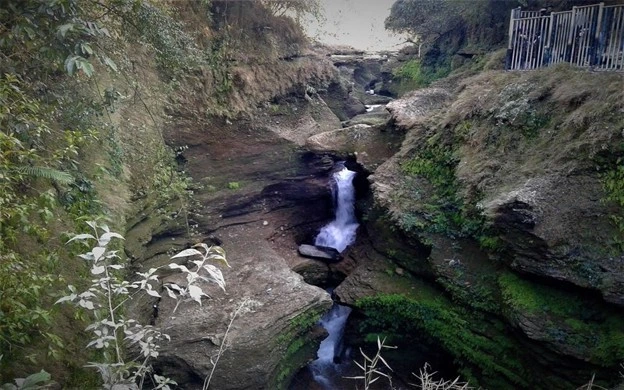
Davis fall's: Witness a unique waterfall that lies 2 Km from central Pokhara City. The water fall directly goes into a deep and narrow canal with no ends. It is believed that this deadly waterfall took the life of a tourist named David, who fell down into the cannel and was never found, and hence the name David waterfall, named in his memory by the people of Pokhara. This place has many nick names like Davy's fall, David's fall or Davis's fall, all mean the same thing `The Davis Water Fall'.
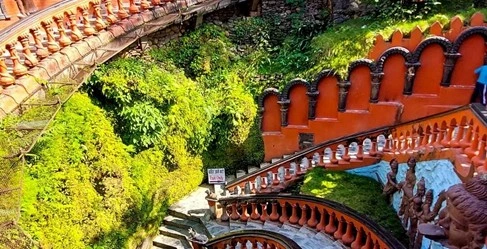
Gupteshwar Mahadev Cave: Gupteshwar Mahadev cave is one of the longest caves in Nepal. On the way to cave, there are shining stones seen everywhere and in the temple is big stone that looks like snake's head and tortoise which is consider as the image of the lord Shiva. Second part is very beautiful and you see shining stones and different types of rocks like bee hives.
Tibetan Village – since 1959, a group of Tibetan refugees have been living in Nepal. One such is Tashiling Tibetan Refugee Settlement at Chhorepatan, which is located near two popular sightseeing sites i.e., Devi’s Fall and Gupteshwor Mahadev Cave.
Overnight at hotel:
Early morning visit Sarangkot to view sunrise (subject to weather permit).
Sarangkot: It offers the breath taking panoramic views of the Annapurna Mountain Range. Situated very close to Pokhara town, it is a semi-developed village located on a hilltop. One has to leave early in the morning while it is still dark to catch the sunrise. Later in the day the clouds gather around the mountains. It has great views in all directions. Pokhara and Phewa lake are to the south. The grand Annapurna panorama is to the north and rolling hills to the east. To the west is a distant view of Mt. Dhaulagiri (8167m).
Back to hotel for breakfast.
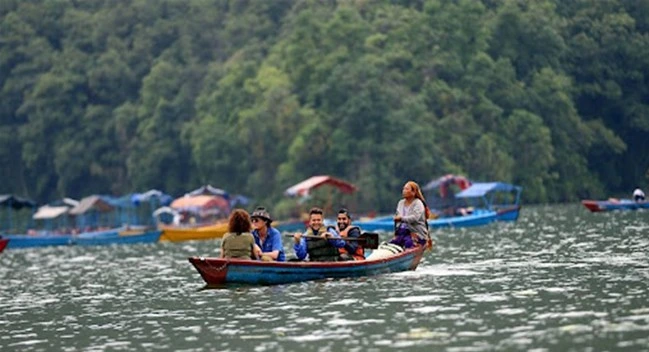
Later visit Pumdikot Mahadev, World Peace Stupa and enjoy around an hour boat ride in Phewa Lake.
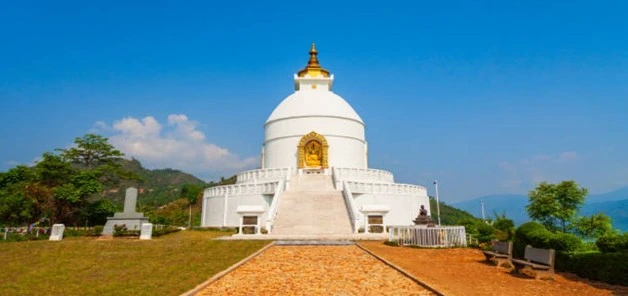
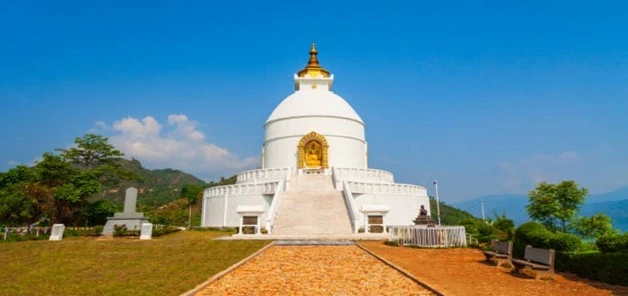
World Peace Pagoda, a massive Buddhist stupa is situated on the top of a hill on the southern shore of Phewa Lake. Besides being a impressive sight in itself, theshrine is a great vantage point which offers the spectacular views of the Annapurna range, Phewa Lake, and the Pokhara city. We Climb the Raniban forest crossing the suspension bridge. After the 2 hours of walk we reach stupa and enjoy the spiritual and scenic beauty. Climbing down from Pagoda is more enjoyable with the view of Phewa Lake and the mountains.
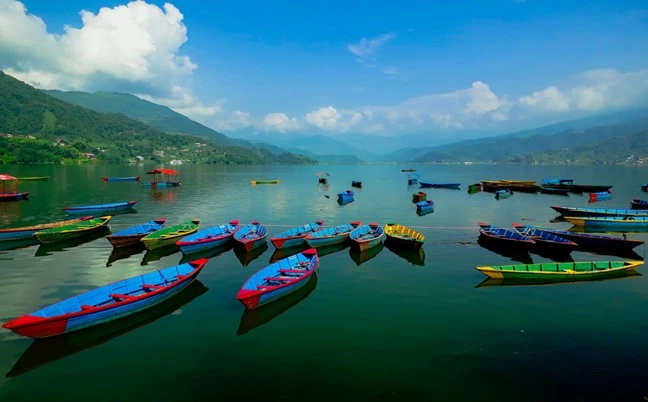
The Fewa (or Phewa) Lake 1.5 kilometre long, second largest lake in Nepal, offers an excellent view of the mountains and their reflections on the lake. Many tours and trekking operators and hotels are located on the lakeside. One can easily find a place to sit back, relax and enjoy great meal while enjoying scenery here. You will also enjoy 01 hrs boating on the lake. Most hotels and guest houses have traditional designs and layouts which match with the surrounding views.
Overnight at hotel.
After breakfast drive to Chitwan.
Upon arrival check-in at resort.
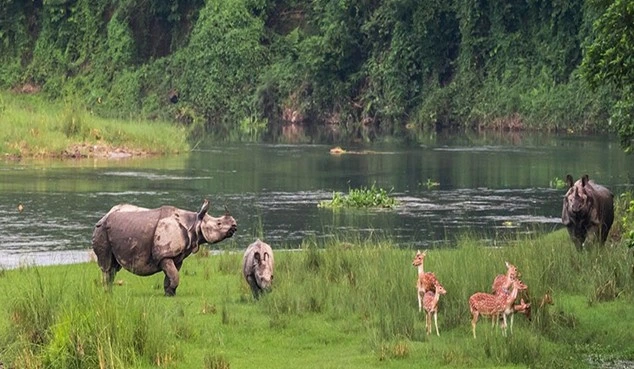
Chitwan is among the last surviving examples of continuous band of forests and grasslands, which once extended from the Indus River in Pakistan to the Burmese border. Chitwan National Park lies in the lush valley of Chitwan situated in the foothills of Churia ranges. It is the first National Park of the Kingdom and is one of the finest national parks in Asia. The Park is famous for its variety of wildlife especially the Great Indian one Horned Rhinoceros.
Later activity as per resort program.
Dinner and overnight at resort.
Activities include; Jeep ride, canoe ride, nature walk, village tour etc.
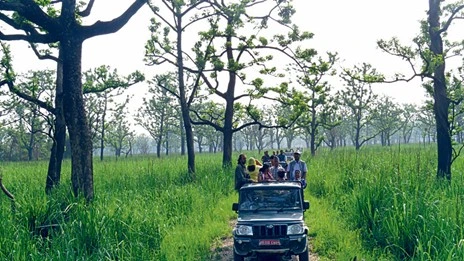
Jeep safari : Jeep safari in Chitwan national park, Community forest is a fascinating drive which opens up the natural setting of forest, jungle, wildlives, etc. Chitwan Jeep Drive one of the active and exciting activity for Jungle safari. Jeep drive include in above 02 nights 03 days package but on your special request it can be done the day you refer. Jeep Drive goes through the grasslands , riverine forests and sal forests to Kasara (the National Park’s head quarters).
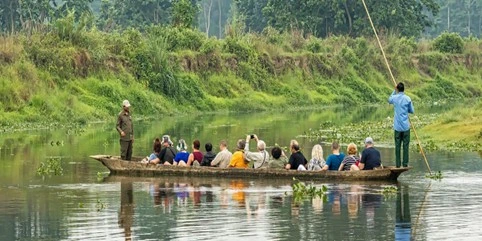
Canoe Ride: Canoe Ride an active package programme of Chitwan Jungle Safari Tour. This include in every pacakages. Canoe ride along the Rapti River will be an excellent opportunity for Bird Watching and for seeing the 2 rare species of crocodiles; the Marsh Mugger and the fish eating Gharial in river bank.
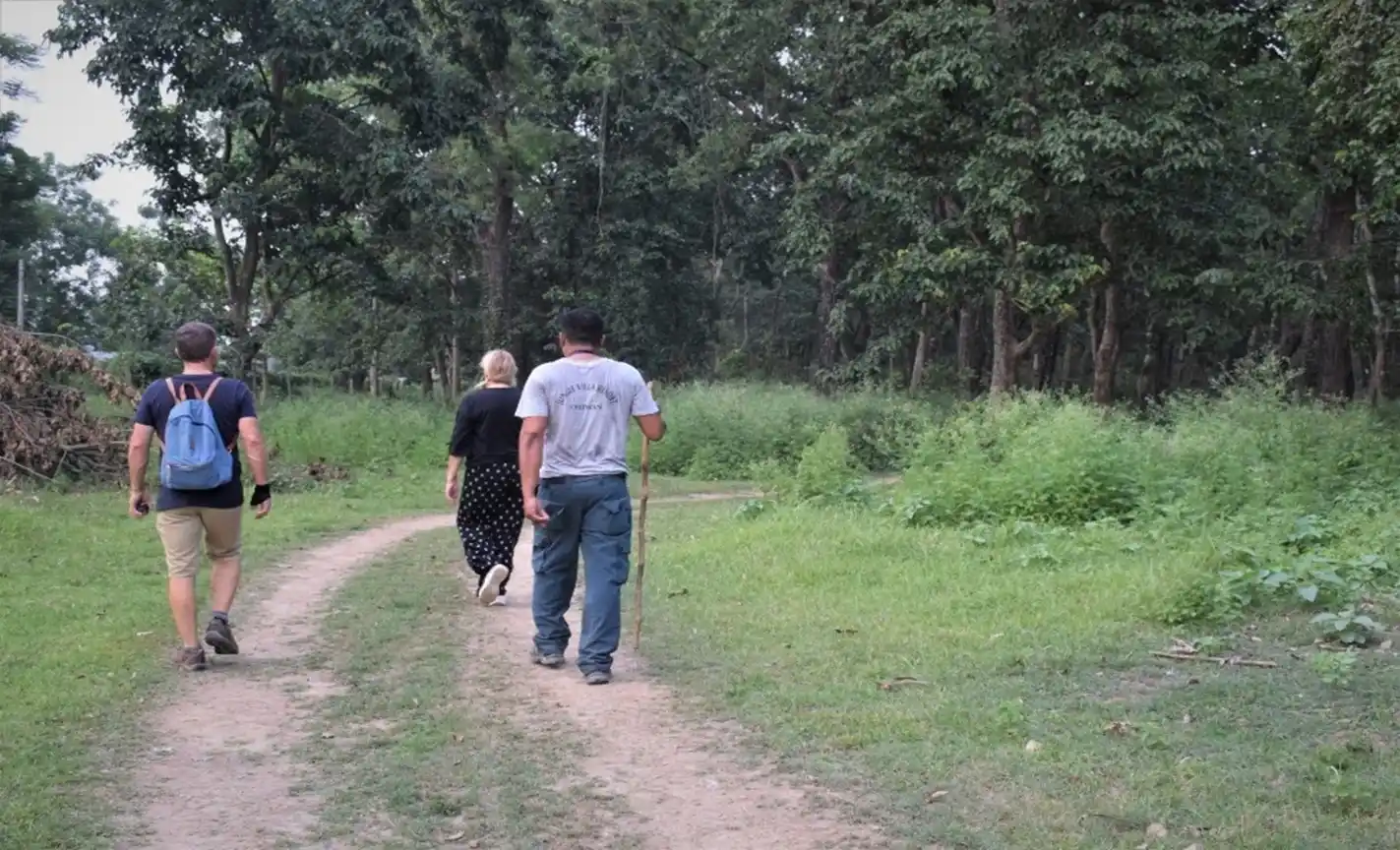
Nature walk : Jungle Chitwan National park walk provides a great opportunity to feel the vives of Nature walk on jungle of Chitwan. Take an exciting and invigorating walk through the lush sub-tropical jungles of Chitwan National Park.Resort trained naturalists will take you to prime spots to view deer, rhinos, sloth bears and other wildlife. They will also give you interesting information about the various plants and animals of the jungle throughout your walk.
Breakfast, lunch, dinner and overnight at resort.
After breakfast drive to Kathmandu.
Upon arrival check-in at hotel.
Overnight at hotel Aloft, Kathmandu.
Breakfast at hotel.
Morning visit Pharping and Kritipur.
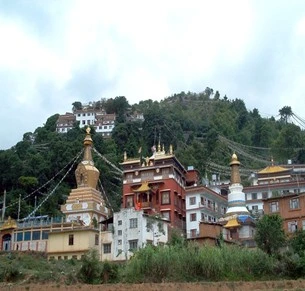
Pharping: lying 18 km south of Kathmandu, Pharping is a small Newari town perched on a hilltop with Buddhist Monastery and now this pilgrimage sites have been taken over by large number of Tibetans. It lies on the way to Dakshinkali. The main attraction is an elaborate 17th century temple which houses a glided image of Goddess Bajra Jogini. The another sights is a cave and hand-imprint of the Buddhist saint Padmasambhav on the rock face. Now a days there is quite new monasteries have been built and some of them accept foreign students as well.
Visit Kirtipur.
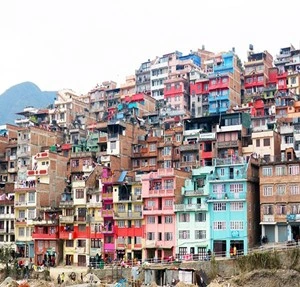
Kirtipur: it is a small town on a hill, 8 km southwest of Kathmandu. The ancient Newar township - with its brick-paved streets lined with typical red brick houses and tiled roofs, and temple squares - is a natural fortress. The temple of Bagh Bhairav which is holy to both Hindus and Buddhist, The triple roofed Uma Maheshwor Temple dedicated to Shiva and Parvati, The Chilanchu Vihara (stupa) are the main attraction of Kirtipur. Tribhuvan University, Nepal’s premier seat of education is located on the foothills of Kirtipur.
Overnight at hotel.
Breakfast at hotel and later transfer to airport for departure.
Interested in this package? Reach out and we'll help you plan the perfect trip.