India, Nepal and Bhutan Tour: How to Plan the Perfect Multi-Country Holiday
Covering three countries in one go sounds amazing on paper. But is it actually possible to plan a multi-country India Nepal Bhutan tour without losing your mind? Yes, it is, and that is exactly what we are going to cover here.
You see, the trick is knowing the right order, the right season and the paperwork before you book anything. Our India travel guide is a handy read if you want more on the Indian side first.
Stick to this blog post till the bottom, and you will know the best route, the visa rules and the mistakes to dodge. Okay, let’s get into it.
Why Combine India, Nepal and Bhutan in One Trip?
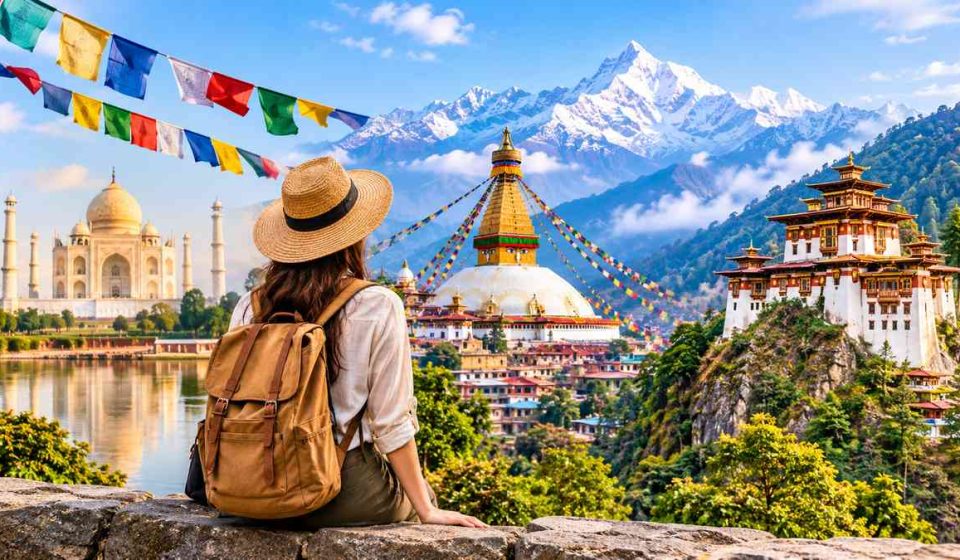
A well-planned India, Nepal, and Bhutan tour covers three very different trips in one. You get a complete cross-section of South Asian culture, spirituality, and Himalayan geography. Each country provides a distinct contrast that complements the others:
What else works well is:
- The flights are short. Kathmandu to Paro takes about an hour.
- Hindu and Buddhist culture links all three, so the trip flows like one story.
- You get city life, jungle, lakes and mountains in a single holiday.
- You can fly into Delhi and out of Paro, so there is no need to return the same way.
Want more detail on one country? You can go through to our Nepal travel guide or about Bhutan when you have time.
How Many Days Do You Need for This Multi-Country Trip?
A good India, Nepal, Bhutan holiday package runs 10 to 14 days. You can break down the days in the following ways:
- 7 days: Fast. Pick two countries, or see only the big hits of three.
- 10 days: Delhi, Agra, Kathmandu and Paro. Doable, but flights eat time.
- 12 to 14 days: The sweet spot. Delhi, Agra, Jaipur, Kathmandu, Pokhara and Bhutan with room to rest.
- 15 to 18 days: Room for a Chitwan jungle safari, Punakha and a short trek.
Remember, each flight day uses up half a day. You can also look at our India tour packages for ideas on the Indian leg. Keep one spare day too, because mountain flights in Paro and Kathmandu can get delayed by weather.
A relaxed pace always wins over a packed one.
Best Time to Call for India, Nepal and Bhutan Tour
The best time for an India, Nepal, Bhutan itinerary is October to November, and March to April. The weather lines up nicely in those months.
- India: October to March is pleasant. April to June gets very hot, with Delhi crossing 40°C.
- Nepal: October and November have the clearest mountain views. March to May has rhododendrons in bloom.
- Bhutan: March to May and September to November are best. December to February is cold but sunny.
June to September is monsoon. So, be careful on the roads as they can be slippery, and there can also be delays in flights.
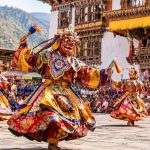
Festivals are another reason to plan well. Paro Tshechu happens in spring and Thimphu Tshechu in autumn.
Nepal celebrates Dashain and Tihar around October and November, and hotels fill up fast then. For better planning, you can browse some Nepal tour packages and see how the dates line up. Dates change each year, so check the calendar before you book.
Best Route for an India, Nepal and Bhutan Tour
The best India, Nepal, and Bhutan tour route is from West to East: Delhi-Kathmandu-Paro. The hops are short flights, which makes it easy to skip the slow border crossings. Here is a 14 day plan.
- Days 1 to 4: Delhi, Agra and Jaipur
- Day 5: Fly Delhi to Kathmandu
- Days 6 to 8: Kathmandu, plus Pokhara if you want lakes and mountain views
- Day 9: Fly Kathmandu to Paro
- Days 10 to 13: Paro, Thimphu and Punakha
- Day 14: Fly home from Paro
Bhutan only has one international airport named Paro, so a good India-Nepal-Bhutan tour package already plans flight timings around it. Only two airlines, Drukair and Bhutan Airlines, fly there, so seats fill fast.
Compare a few Bhutan tour packages to see which flights and hotels come with them. Paro has direct flights to Delhi, Kolkata, Mumbai, Bagdogra and Guwahati, so you can pick the exit that suits you.
What about roads? You can enter Nepal by road at Sonauli, Raxaul or Kakarbhitta, and enter Bhutan at Jaigaon near Phuentsholing. Nepal and Bhutan share no border, though, so you cannot drive straight between them. Flying is the clean way.
Visa and Permit Requirements
Paperwork is simpler.
For Indian Citizens:
- Nepal: As an Indian citizen, you do not require a visa to enter Nepal. You can take either your passport or voter ID card.
- Bhutan: To enter Bhutan, you need an entry permit. Apply online or at Phuentsholing with a passport that is valid for six months.
- Bhutan fee: There is a Sustainable Development fee for all Indians at ₹1,200. Children get a discount.
For Foreign Travellers:
- India: An e-visa or regular visa, applied for online before you fly.
- Nepal: Visa on arrival or online. A 15-day visa costs about USD 30 and a 30-day visa about USD 50.
- Bhutan: Visa through a licensed tour operator or the official portal, plus a fee of USD 100 per night at present.
An India- Nepal- Bhutan holiday package from a licensed operator also handles your Bhutan permit and fee, which is one less task for you. Foreign visitors who return via India should also confirm that their Indian visa allows re-entry.
Rules and fees change, so check the official sites a few weeks before you fly.
Must-See Places in Each Country
Pencil these into your India Nepal Bhutan itinerary.
India
The country has a lot to tour, but the major ones include:
- Taj Mahal, Agra: Go at sunrise. It is closed on Fridays.
- Amber Fort, Jaipur
- Red Fort and Humayun’s Tomb, Delhi
- Varanasi ghats at evening aarti, if you have a day to spare
Nepal
So, what are the top tourist attractions in Nepal that deserve to be part of your plan?
- Boudhanath Stupa, Pashupatinath and Swayambhunath in Kathmandu
- Kathmandu Durbar Square
- Phewa Lake, Pokhara
- Chitwan National Park for rhinos
Bhutan
Bhutan has plenty of gems. Some of the must-see places in Bhutan for Indians include:
- Tiger’s Nest (Paro Taktsang): A monastery on a cliff. The hike takes about 5 to 6 hours round trip.
- Punakha Dzong, built where two rivers meet
- Buddha Dordenma, Thimphu
- Dochula Pass with its 108 chortens
Do not try to see everything. Pick one or two highlights per country and spend real time there.
Practical Tips Before You Go
The key to packing light for your India-Nepal-Bhutan tour is understanding the weather. For Delhi and Agra, bring lightweight cotton. For Kathmandu and Paro, bring a windcheater and warm layers. Here are other things you should know:
- Altitude: Paro and Thimphu sit around 2,200 to 2,300 metres. Walk slowly, sip water and rest on day one.
- Cash: Bhutan accepts Indian rupees. Nepal allows Indian notes of ₹100 and below, so carry smaller notes.
- Dress code: In Bhutan and Nepal, people visit dzongs and temples and take photos outside, but not inside the prayer halls. Cover your knees and shoulders when visiting.
- Booking: Book the flights to Paro early or take an India-Nepal-Bhutan holiday package to secure your Paro flights.
- Motion sickness: Bhutan’s roads wind a lot, so carry tablets.
- Insurance: Take travel insurance that covers medical care and flight delays.
Keep these things in mind so you can avoid trouble and make the most of this multi-country tour.
Common Mistakes to Avoid When Planning
Plenty of travellers trip up on the same things:
- Packing too many cities into too few days. Two nights per place is a good minimum.
- Picking the cheapest India Nepal Bhutan tour package without reading what it includes. Check flights, permits and the Bhutan fee.
- Travelling in the monsoon and losing days to rain.
- Forgetting the Bhutan permit and fee.
- Planning a road trip between Nepal and Bhutan. There is no direct border.
- Skipping a spare day for flight delays.
- Booking Paro flights late.
Of course, travel plans don’t always go exactly as expected, and that’s part of the journey. The idea is not just to visit three countries, but to experience each one without feeling like you’re constantly racing against the clock.
Your Best Multi-Country Holiday is All Planned Under Asian Destination
A trip to India, Nepal and Bhutan surely comes with so many hopes, plans and things you want to experience. So, why let poor planning or missed details get in the way of a memorable holiday?
With Asian Destination, you get the right assistance to plan your journey just the way you want. We help take care of all the important details, from creating your itinerary and arranging hotels, transportation and sightseeing to managing permits, flights and travel connections.
So, share your travel plans with Asian Destination, and let’s make your dream multi-country holiday a wonderful experience!
Frequently Asked Questions
Q1. How many days do you need for India Nepal and Bhutan?
A: You need 10 to 14 days for the essentials like Delhi, Agra, Jaipur, Kathmandu, Paro, Thimphu and Punakha. You can do 10 days if you cut a few cities. 15 to 18 days are needed for a trek, or Chitwan and/or Pokhara.
Q2. Do I need different visas for each country?
A: Yes. Each country has its own entry formalities. Indian nationals don’t need a visa to go to Nepal, but need to carry their passport/voter ID card. Indian nationals also need an entry permit instead of a visa to visit Bhutan. Foreign nationals have to arrange Indian, Nepali, and Bhutanese visas through a licensed operator or official website to visit these three countries.
Q3. Can you travel from India to Nepal and Bhutan by road?
A: Yes, you can reach both by road from India, but not between them directly. Nepal has border crossings at Sonauli, Raxaul and Kakarbhitta. Bhutan’s main gate is Jaigaon near Phuentsholing. Nepal and Bhutan share no border, so travellers fly from Kathmandu to Paro or pass through Siliguri in India.
Q4. Is Bhutan expensive compared with India and Nepal?
A: Yes, Bhutan costs more than India and Nepal for most travellers. A daily Sustainable Development Fee applies on top of hotels and meals. Indian citizens pay ₹1,200 per night, and foreign visitors currently pay USD 100. Nepal and India are easier on the wallet.
Q5. Is the trip family/senior citizen friendly?
A: Yes. The itinerary can be adjusted according to the needs of families and senior citizens. The altitude in Paro, Bhutan, is about 2,200 meters and is relatively low compared to other places. So hiking to Tiger’s Nest may be hard for senior citizens, and they can always take a pony for part of the journey.
Q6. Can I complete the entire itinerary in 7 days?
A: Yes, but it’ll be quite tiring as you will have to take a number of short flights, and you will need to reach your destination early in the day in order to make the most of it before you head to your next destination. For a more relaxed plan, it will be better to plan three separate trips.
Q7. Do I need a guide in Bhutan?
A: Yes. An approved guide is required for trekking and some other restricted regions. While it is not mandatory, having a guide is helpful in understanding the history and functions of the dzongs and other places of interest.