Bhutan Festival Calendar 2027: When and Where to See a Tshechu
When we hear Bhutan, we probably visualize those beautiful valleys, mountains covered with snow, and peaceful monasteries. But what if we told you there is another side to this little Himalayan country?
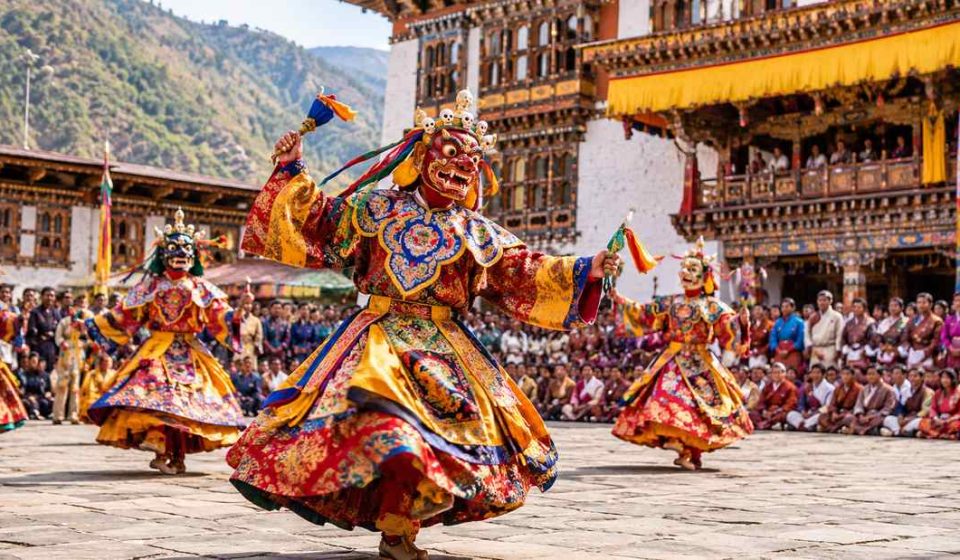
Bhutan festivals 2027 welcome you to experience Tshechu. There will be the sound of drums echoing through ancient monastery courtyards, colourful masks, traditional dances, and locals dressed in their finest clothes.
This is definitely an experience that should not be missed. So, go on and list this event as part of your Bhutan travel itinerary. To have more details on it, scroll down to see the dates, locations and celebrations of the festivals of 2027.
What Is a Tshechu?
The word Tshechu means “tenth day.” These festivals take place on the tenth day of a month in the Bhutanese lunar calendar. The date is linked to the deeds of Guru Rinpoche, also known as Padmasambhava.
Guru Rinpoche was an eighth-century Buddhist master who spread Buddhist teachings across the Himalayas. People in Bhutan regard him as the second Buddha. Most Tshechu festivals last three to five days.
To join the celebrations, villagers walk in from nearby valleys dressed in their finest gho and kira. The majority of families delight in picnics in the courtyard as monks and lay dancers perform sacred masked dances, which are called cham. These dances are believed to carry blessings and clear negative karma.
The Origins of Bhutan’s Festivals
Bhutan’s spiritual history began in the 8th century with the visit of Guru Rinpoche. He introduced the Bhutanese to the practice of Buddhism and the masked dances, which are an important feature of all festival celebrations in Bhutan to date.
The Tshechu festivals took shape in the 17th century, when Zhabdrung Ngawang Namgyal united Bhutan and built several dzongs. These large fortress-monasteries served as places of worship and centres for government work. Their courtyards soon became gathering places for religious festivals and community celebrations.
When you book Bhutan tour packages, these festivals give you a chance to see this history up close and experience the traditions that Bhutanese communities have followed for centuries.
A Quick Look at Bhutan Festivals 2027
In this section, we have covered four major Tshechus below. They sit in the west, the capital, the centre and the far east, so your route changes a lot based on the one you pick.
| Festival | Place | Dates (2027) | Region |
| Paro Tshechu | Rinpung Dzong, Paro | 18 to 22 March | West |
| Thimphu Tshechu | Tashichho Dzong, Thimphu | 10 to 12 October | Capital |
| Jakar Tshechu | Jakar Dzong, Bumthang | 6 to 9 November | Central |
| Trashigang Tshechu | Trashigang Dzong, Trashigang | 7 to 9 December | East |
One note on dates. Tshechu dates follow the lunar calendar, and the Central Monastic Body confirms them. Tour operators currently list these as tentative, so check again a few months before you book flights.
Paro Tshechu 2027: 18 to 22 March
Paro Tshechu is one of the major religious celebrations in Bhutan and a major highlight of the country’s cultural calendar. The five-day festival fills the courtyard of Rinpung Dzong with sacred masked dances, traditional music and colourful ceremonies.
Its most special event takes place on the final morning, attracting thousands of locals and visitors. Experience an important tradition of Bhutanese culture during your visit to the Bhutan Festivals 2027!
Where is the Festival Held?
Paro Tshechu takes place at Rinpung Dzong in the Paro Valley, western Bhutan. The town is also home to the country’s only international airport. So, it is a convenient starting point for your Bhutan holiday.
What Makes Paro Tshechu Exceptional?
The main highlight is the Thongdrol ceremony on the final morning. Before the sun rises, a giant silk painting of Guru Rinpoche is hoisted on the wall of Rinpung Dzong.
The people of Bhutan believe that seeing this sacred image helps one get cleansed of their sins and brings blessings. The display lasts only a few hours before the painting is carefully rolled away as the sun rises.
What Else You Should Know?
There are things you need to keep in mind when visiting this site.
- It would be a good idea to reach Rinpung Dzong before sunrise on the final day, so you can spot the best view before the crowd arrives.
- And don’t forget to layer up with warm clothes, because March mornings can be cold.
- Since Paro sits around 2,200 metres above sea level, you can try to adjust to the altitude before doing strenuous activities.
- Also, keep a separate day for the Tiger’s Nest (Paro Taktsang) hike, which takes around four to five hours for a round trip.
- There is also a seventh-century temple located a short drive from Paro, named Kyichu Lhakhang, that you can visit too.
Also, do remember to keep the last morning free for the Thongdrol Ceremony. It is the special feature of Paro Tshechu and one of the most important religious traditions of Bhutan.
Thimphu Tshechu 2027: 10 to 12 October
Thimphu Tshechu is a great festival to include in your Bhutan festivals 2027 travel plans. This festival takes place in Bhutan’s capital city, Thimphu, so visit there to see the vibrant cultural performances in Bhutan.
Where is it Celebrated?
The festival takes place at Tashichho Dzong in Thimphu, around 55 km from Paro. This impressive, large fortress is a government center and houses the throne room of the King of Bhutan. Its grand architecture looks especially beautiful in the evening.
What Makes it Special?
The Thimphu festival is one of the biggest in Bhutan, and celebrations begin with the Thimphu Drubchen on 5th October 2027. The main festival runs from 10th to 12th October.
You can watch traditional performances such as:
- Black Hat Dance
- Dance of the Judgement of the Dead
- Eight Manifestations of Guru Rinpoche
Booking four to six months ahead is a good idea if you don’t want to be disappointed by full bookings. To start the day, you can spend your morning at the Centenary Farmers’ Market to see produce on-site, red rice, cheese, and chillies.
You can then visit the Buddha Dordenma statue for beautiful valley views. After that, you can stop at the Memorial Chorten, a popular religious landmark in the city.
Jakar Tshechu: 6 to 9 November 2027
The Jakar Tshechu is a 4-day festival that takes place in the Bumthang valley. You can watch sacred masked dances, meet people from nearby villages and experience the cultural side of central Bhutan.
Where is the Festival Held?
The festival is held at the Jakar Dzong (the Castle of the White Bird). It is located in the Bumthang valley, which contains four beautiful valleys and is the spiritual centre of Bhutan. There are also a few old temples and monasteries.
What Makes Jakar Tshechu Unique?
Jakar Tshechu is quite different from the grand celebration of Paro and Thimphu. It has a quieter, more traditional village setting. You can watch the masked dances from close to the performance ground and chat with native people.
November is also a good time to attend other cultural events in central Bhutan. The Black-necked Crane Festival in Phobjikha is scheduled for 11 November, followed by Jambay Lhakhang Drup from 14 to 17 November. You can include all three events in your Bhutan festivals 2027 itinerary.
Before You Attend
Keep these things in mind before going to the festival:
- Bumthang is around 270 km from Thimphu, and the drive takes about eight hours through winding mountain roads and high passes.
- A domestic flight from Paro can save travel time, but flight schedules are limited. Check availability in advance.
- November nights can get close to freezing, so pack a warm jacket and thermal clothing.
- Try local buckwheat pancakes, valley honey and cheese during your stay.
- Keep some time for Jambay Lhakhang, Kurjey Lhakhang and Tamshing Lhakhang. All three historic temples are a short drive from one another.
Make time for Bumthang’s local culture! Jakar Tshechu is a good way to experience Bhutan’s village traditions, sacred dances and peaceful valley life without the crowds of its bigger festivals.
Trashigang Tshechu: 7 to 9 December 2027
Trashigang Tshechu is another great festival to include in your Bhutan festivals 2027 list. Here, you get to see how the community in eastern Bhutan celebrates their cultural events with colorful outfits, dances and religious activities.
Where is the Festival Held?
Trashigang Dzong in eastern Bhutan hosts this festival. It is around 550km away from Thimphu. This historical fortress was built in the 17th century and is located on a Ridge with amazing views of the deep river valley below. The hilltop location also offers stunning views.
A Glimpse of Eastern Bhutanese Culture
Trashigang Tshechu has a different cultural character from the festivals in western Bhutan. People from the Sharchop and Brokpa communities attend the celebrations in their traditional clothing.
Brokpa visitors from Merak and Sakteng are especially easy to recognise by their yak-hair hats and warm woollen clothes. The region is also famous for its handwoven textiles.
Make the Most of Your Eastern Bhutan Visit
Trashigang Tshechu is a great event to join, but take into consideration some tips below:
- Keep around two days for the drive from Thimphu in each direction. The route crosses Thrumshing La, a mountain pass at nearly 3,800 metres.
- Carry snacks and motion-sickness tablets for the winding mountain roads.
- Trashigang sits at around 1,100 metres, so December days are generally mild and sunny, although the mountain passes can be very cold.
- Visit Gomphu Kora, a riverside temple and important pilgrimage site.
- Stop at the textile villages near Khaling to see local weaving traditions.
- Trekkers can also use Trashigang as a starting point for journeys towards the Merak and Sakteng region.
Don’t miss the chance to experience eastern Bhutan! You can also visit nearby temples and villages to learn more about the culture of this part of Bhutan.
What You Will See at the Dances
You don’t need to dig into the past to have a great time at Bhutan’s festivals. Just go with the flow! A little introduction to these performances can be enough to make your Bhutan festivals 2027 experience even more interesting.
- Shanag (Black Hat Dance): Dancers wear tall black hats and brocade robes. They move slowly in circles to represent them defeating evil spirits.
- Raksha Mangcham (Judgement of the Dead): Dancers wearing masks perform a play showing how people are judged after they pass away based on their good and bad actions. This is one of the highlights of the Tshechus.
- Guru Tshengye (Eight Manifestations): Eight versions of Guru Rinpoche wear bright clothes. Each represents a different aspect of his spiritual life.
- Atsara: These funny characters wear red masks and walk around the crowd, making jokes and teasing the visitors. Don’t be surprised if they steal the show!
Grab a good spot, keep your camera ready and soak up the festive vibes. Watch the dancers, laugh along with the Atsaras and take in the colourful celebrations. You don’t need to be an expert on Bhutanese culture to have a great time at Bhutan festivals 2027!
Practical Travel Tips for Any Tshechu
This section of the Bhutan travel guide has basic information for all of the listed festivals.
- Dress appropriately: Shoulders and knees should be covered. You may be required to remove hats and shoes before entering temples.
- Ask before you take a photo: This is especially true for monks and religious items.
- Dance ground etiquette: Try to be respectful and appreciative of the monastery’s practices and remain on the edges of the courtyard.
- Be Early: Good seats and shade are taken early. Prepare for the hot sun with water, sunscreen and a hat.
- Carry Money: Small stalls will sell you crafts, food and prayer flags. Many will not take cards.
- Take it Easy: Bhutan roads are slow, and on festival days there can be heavy traffic near dzongs.
There are even plenty of places to visit in Bhutan close to these festival towns.
- Punakha Dzong, at the meeting point of two rivers, is one of the most photographed buildings in the country.
- Phobjikha Valley is a quiet glacial valley where black-necked cranes spend winter.
- Haa Valley, near Paro, has a slower pace and fewer visitors.
Each one fits easily before or after a Tshechu.
Find Your Next Asian Adventure with Asian Destinations!
Curious about your next holiday destination? Head over to Asian Destinations for friendly travel guides, destination tips, local experiences, and exciting tour packages across Asia.
Whether you’re interested in cultural holidays, mountain escapes, beach breaks, or family trips, our travel blogs have plenty of inspiration. Browse our latest articles, discover new places, and get inspired for your next Asian getaway with Asian Destinations!
FAQs
Q1. What should I wear for a Tshechu festival?
A: You should wear modest and comfortable clothing. While it is not necessary to wear traditional Bhutanese clothing, wearing a nice top, trousers, or a long skirt would work well. You could also bring a warm jacket, as mornings can be quite cold, especially in places like Paro and Bumthang.
Q2. Are tourists allowed to join in with the Tshechu festivities?
A: Yes, they are! Tourists can easily join in with the celebrations by enjoying the music and watching the masked dancing. You could also have a walk around the festival area, sample some local cuisine and have a chat with some friendly locals. Just remember to be respectful of the religious traditions.
Q3. Will I need tickets to attend a Tshechu festival?
A: Most Tshechu celebrations happen in the open courtyards of a dzong. You will usually not need to pay to enter. There may, however, be some rules in place depending on where you go. Your local guide will be able to tell you more information.
Q4. What food can I eat during Bhutan’s festival period?
A: Festival days are a great opportunity to sample Bhutanese food! Ema Datshi (a tasty chilli and cheese dish), red rice, momos and buckwheat pancakes from the local area are all popular. You may also find some small food stalls.
Q5. Is it safe to visit Bhutan with children during Tshechu?
A: Yes, it is! Children can enjoy the brightly coloured outfits, music and energetic dancing. However, the festival areas can become busy, so keep your children with you and bring some water and snacks.
Q6. What languages will I hear during Bhutan’s festivals?
A: The national language of Bhutan is Dzongkha. However, depending on what region you are in, locals will also speak their own language. Sharchop and Bumthangkha are common. English is widely spoken in tourist areas, and your local guide will be able to help translate.
Q7. Can I purchase traditional Bhutanese souvenirs?
A: Yes! You may find some little stalls selling handmade crafts, prayer flags, textiles, woodwork and local treats. These would make a wonderful souvenir!