
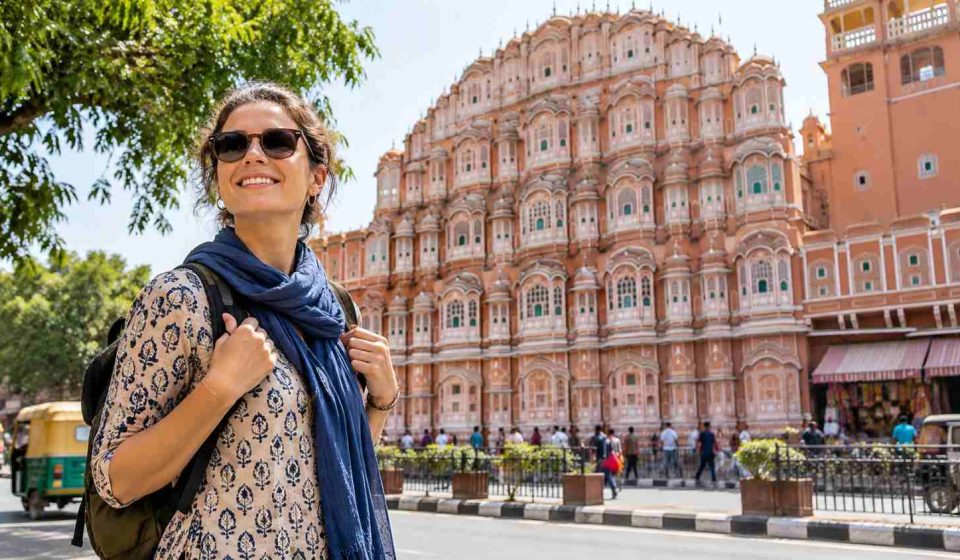
Is India Safe for Tourists? A Practical Guide for Solo and Women Travellers
Ah, India. Where do you even begin? One day you’re eating hot jalebis in a crowded old market. Next, you’re watching the sun rise over the Taj Mahal or sipping chai by a quiet backwater in Kerala.
It’s loud, colourful, warm and a little chaotic, and that’s exactly why people fall for it. But before you pack, one question usually pops up: is India safe for tourists?
It’s a fair thing to ask. The answer isn’t a simple yes or no. So this India travel guide for first-time visitors covers what really matters and how to enjoy the trip without the stress.
Short Answer
Is India safe for tourists? For the vast majority, yes. As long as you plan wisely and remain vigilant, there shouldn’t be any issues.
In 2025, India welcomed around 9 million foreign tourists (Ministry of Tourism). Most people left with amazing memories and an upset stomach, but there was nothing worse.
However, crime still does happen. Women face more harassment than men, and being on the roads is more dangerous than the average visitor expects. We cover it all in this India travel guide with numbers you can verify, so check it out.
What the Numbers Say
Plenty of articles answer the question “Is India safe for tourists?” with opinions only, so let’s start with figures.
| Measure | Figure | Source |
| Foreign tourist arrivals, 2025 | About 9 million | Ministry of Tourism |
| Crimes against women registered, 2024 | 448,211 (up 0.7% from 445,256 in 2022 | NCRB, Crime in India 2023 |
| Crime rate against women, 2024 | 64.6 per 100,000 women | NCRB |
| Highest rate among states and UTs | Delhi, 130.7 per 100,000 women | NCRB |
| Lowest rate among states and UTs | Nagaland, 5.1 per 100,000 women | NCRB |
| Road deaths, 2023 | 172,890 (about 20 every hour) | Ministry of Road Transport and Highways |
| US travel advisory | Level 2, issued 16 June 2025 | US State Department |
High numbers in large cities do not always mean more crime. More people in a large city may mean more reports are filed. Conversely, a smaller state or a state with a lower population may mean fewer reports are filed. Statistics help, but street smarts will get you further.
Where to Go and Where to Be Careful
India is huge, and safety changes a lot from one region to the next. So, grab a simple way to think about it.
Easier for First-Timers
Kerala, Rajasthan’s main cities, Goa, Pondicherry and Himachal’s tourist towns are popular starting points. Tourism is a big part of local life here, so the infrastructure is better and locals are used to visitors. Many travellers say these places feel calmer than the big metros.
Great, But Stay Sharp
Delhi, Mumbai, Agra, Jaipur and Varanasi are unmissable. They are also crowded, noisy and full of touts. Keep your bag zipped in front of you, use app cabs or the Metro, and skip long solo walks after dark. Going with a guide or a small group on your first visit makes these cities much easier.
Check Before You Book
Some places are risky for tourists. That could be a whole state, or an area near a border. The government may have officially warned its citizens about those places. These warnings are called travel advisories.
So, before you go, look up the official warnings. If your route touches a risky area, go with a local guide or pick another route.
Watch the Season, Too
Winter smog hangs over Delhi and much of north India. Monsoon rains can trigger landslides in the hills. Rajasthan gets brutally hot in summer. A good destination at the wrong time can feel like a bad one.
Safety Tips for Women Travellers
Plenty of women travel solo through India every year and love it. Others face stares and comments, along with unwanted selfie requests within an hour of landing. Women searching “Is India safe for tourists?” want a straight answer. Yes, it is safe with a few precautions. A few precautions lower your risk the most.
Dress to Blend In
Try to cover your knees and shoulders in small towns and temples. This can cut down on stares. Scarves can cover a lot of this area.
Pick Your Stay Carefully
Read recent reviews written by other women, look for a 24-hour front desk, and check the route back at night on a map before you book. Family-run homestays are a great choice for a first stop.
Arrive in Daylight
Book your first-night hotel and airport pickup in advance. When your flight lands after midnight, ask the hotel to send a driver.
Use Women-Only Space
Delhi Metro has a women-only carriage. In Mumbai, local trains have ladies’ compartments. If taking overnight trains, 2AC/3AC are less hectic.
Share Your Trip
Ride-hailing apps like Uber, Ola and Rapido let you share a live trip link, so send it to a friend every time. Check the number plate before you step in.
Say No Loudly
A firm “no” in a clear voice works better than politeness. Walk towards a shop, a family or a police booth, and call attention to the person bothering you. Sexual harassment, stalking and voyeurism are crimes under Indian law.
Guard Your Drink
Watch it being poured and never accept one from a stranger. Trust your gut and leave. You do not owe anyone an explanation.
Cancel the rickshaw, skip the party, change the hotel. Check in daily. Message someone at home each evening with where you are staying.
Solo Travel Playbook (Any Gender)
Solo travellers of every gender ask, “Is India safe for tourists on their own?” The answer improves a lot with a good first-week plan.
- Start in a gentler region such as Kerala or Rajasthan before tackling the chaos of Old Delhi or Varanasi.
- Staying at a hostel or joining a small group tour can help you meet people during your first couple of days. This helps you find travel companions for the tougher parts.
- Get a local SIM or e-sim on arrival. Having a functioning phone with maps/data is very useful.
- Have a digital backup of your passport, visa & insurance in your cloud. Have a physical copy in a separate bag.
- Enroll in your embassy’s traveller programme (the US has STEP) so they can reach you in a crisis.
- Buy travel insurance that includes medical care and evacuation. Hospital care in private facilities is good but can cost a lot.
- For treks, register with the local authority, hire a licensed guide and respect altitude rules, since altitude sickness is a bigger threat than crime in the Himalaya.
Put these habits together and your first week gets a lot easier. None of it is hard, and all of it adds up.
Getting Around Safely
Transport can be the biggest risk for most visitors. When asked, “Is India safe for tourists?” We usually talk about transport.
- Cross Roads Like a Local: Walk slowly and let vehicles go around you. Do not dash or stop halfway.
- Buckle Up in the Back Seat: Hardly anyone does it, and that is part of why 16,025 people died without a seat belt in 2023.
- Skip Night Road Trips: Highways are riskier after dark with trucks, animals and unlit vehicles.
- Rent a Scooter Only If You Are Experienced: You need a valid licence plus an International Driving Permit, and a proper helmet.
- Prefer Trains to Overnight Buses: Lock your bag to the berth with a chain, and note that the railway security helpline is 182.
- Pre-Agree Fares: Use ride apps, prepaid taxi counters at airports and stations, or settle the price before you sit down.
You can’t fix India’s roads, but you can control how you use them. Do these things mentioned above and you’ve removed most of the risk.
Common Scams and How to Dodge Them
Scams are the most common issue tourists face. Almost all will be non-violent and money-related. If you’re wondering, “Is India safe for tourists in busy bazaars?” most situations can be avoided by politely saying no and walking slowly.
Your Hotel is Closed or Full
A driver or friendly stranger says your hotel is shut and takes you to a partner hotel that pays them a commission. In this situation, you can call your hotel yourself before you follow anyone.
Fake Tourist Offices
Tourist offices near major train stations will offer expensive tours/packages. Using only official counters is best. The Ministry of Tourism helpline number is 1363.
Unofficial Guides at Monuments
A local will offer a free tour but ask for lots of money. Always use official counters to hire guides or buy entry tickets from the official website.
Forced “Blessings” and Donations
At ghats/temples, someone will place a flower/tilak on you and ask for money. Politely refuse. If you want to give money, give it to a registered charity.
ATM Skimmers
Devices can be placed on ATMs to copy your card details. Only use ATMs in bank branches and cover the keypad.
Most scams use the same method. Someone will approach you, give you some pressure and try to get you to give them your money.
Take your time, politely say no and double-check. A calm tourist is difficult to target.
Food, Water, Health and Air
Stomach trouble is the number one complaint. It is common, not a sign that India is unsafe, and it is mostly avoidable.
It’s recommended to drink sealed bottled water, and also skip ice in roadside drinks. Eat at busy stalls where food is cooked fresh and served hot, which is how most locals pick a safe stall too.
Visit a travel clinic 4-8 weeks before you leave. They can advise what vaccinations you need (usually typhoid & hepatitis A). They can also advise on malaria depending on your route. Also, dengue is spread by mosquitoes, so include repellent in your luggage.
Anyone asking ‘Is India safe for tourists’ in terms of health should also check the air: Delhi and much of north India have poor air quality in winter, so check the AQI before outdoor plans and carry an N95 mask.
Money, Visa and Paperwork
Only apply for an e-Visa on the official government website. Many fake websites will charge high prices. Include a mixture of cash and cards.
Have small notes for rickshaws/tips. Split your money into two bags. All hotels in India will need to log your passport details, so don’t be surprised if they make a copy.
Emergency Numbers to Save Before You Land
Want one more trick for travelling in India safely? Don’t go in blind. A licensed guide or a small-group tour in your first few days teaches you how things work.
And just in case, save the numbers below before you land. You’ll probably never need them, but it’s good to have them ready.
| Service | Number |
| National emergency (police, ambulance, fire) | 112 |
| Tourist helpline (24 hours, multiple languages) | 1363 or 1800-11-1363 |
| Women helpline | 181 |
| Women in distress | 1091 |
| Police | 100 |
| Ambulance | 108 (102 in some states) |
| Railway security | 182 |
| Cyber crime | 1930 |
Dial 112 first in any emergency, since it works across the country by call, SMS and the 112 India app. The tourist helpline is for guidance and complaints, not for emergencies. Some state numbers differ, so confirm local ones with your hotel on arrival.
Get the Safest India Guide at Asian Destination
No place in the world is completely safe, and India, the most populous country on earth, is no exception. With so many people, cities and cultures, safety changes from one street, season and region to the next.
That is why a proper safety guide matters. It tells you where to go, what to avoid, how to get around and who to call if something goes wrong. At Asian Destination, we put all of this into simple, practical advice you can use.
Read through our guide before you pack, save the key numbers and plan wisely. Then enjoy India for what it is: warm, colourful and unforgettable.
Frequently Asked Questions
Q1. Are there safety concerns for solo female travelers in India?
Ans: Yes, there are, but there are a lot of women who travel solo to India every year. The rate fell slightly in 2024, to 64.6 cases per 100,000 women, but there are still concerns.
There will be public harassment. Solo female travelers should wear modest clothing, use reliable transport, book accommodation with good reviews and keep someone back home updated on where they are.
Q2. What are the safest cities to visit in India?
Ans: There are no completely safe cities. The statistics given are regarding crime rates for residents. Travelers report that Himachal Pradesh towns, Pondicherry, Goa, Rajasthan and Kerala cities are safer.
Q3. Is it safe to travel around India at night?
Ans: Yes, it is safe to travel around the main tourist areas, but you should avoid traveling in the backstreets, long-distance transport and train/bus stations. Book a taxi and avoid walking alone at night.
Q4. Is Indian street food safe to eat?
Ans: Yes, mostly. Choose busy street food stalls where the food is fresh and hot. Avoid eating salads, cut fruit and drinking tap water. In your first few days, eat little to let your stomach get used to it.
Q5. Is Delhi safe for tourists?
Ans: Yes, if you take sensible precautions. Delhi had the highest number of crimes against women among India’s 19 big metro cities in 2024 (13,396). It is also a popular place for scammers to target tourists.
Use the Metro and app taxis. Avoid walking alone late at night and stay in well-reviewed areas. It is the busiest place for foreign visitors to enter, and most come away with just small stories of haggling.
Q6. Should I have travel insurance for India?
Ans: Yes. Private healthcare is good, but you’ll be charged when you arrive. You may get big bills if you go trekking, on a road trip or get a tummy bug. Choose a policy that includes evacuation, theft and cancellation.